
Spirulina: The Blue-Green Superfood
What spirulina is, where it comes from, and what makes it one of the most nutrient-dense foods studied - from Aztec harvests to modern cultivation.
Spirulina is an old food with a modern supply chain. That is the useful way to look at it: not as a miracle powder, and not as a generic green supplement, but as a cultivated cyanobacterial biomass with a distinctive nutrient and pigment profile.
History Without the Mythology
The organism commonly sold as spirulina is usually Arthrospira platensis or a closely related Arthrospira species. It grows naturally in alkaline waters, including lake systems in Africa and the Americas.
The Aztec record around Lake Texcoco and the Lake Chad tradition are often used as romantic proof points. They are better read as practical food history. People harvested what their water systems produced, dried it, and used it as a local food.
How Spirulina Is Cultivated Now
Commercial spirulina is grown deliberately, not gathered casually. The process is simple to describe and difficult to run consistently.
The Perfect Growing Conditions
Spirulina grows best in alkaline water, often around pH 9-11. That selective environment helps suppress many competing organisms, but it does not remove the need for process control. Water quality, pond hygiene, harvest timing and drying all matter.
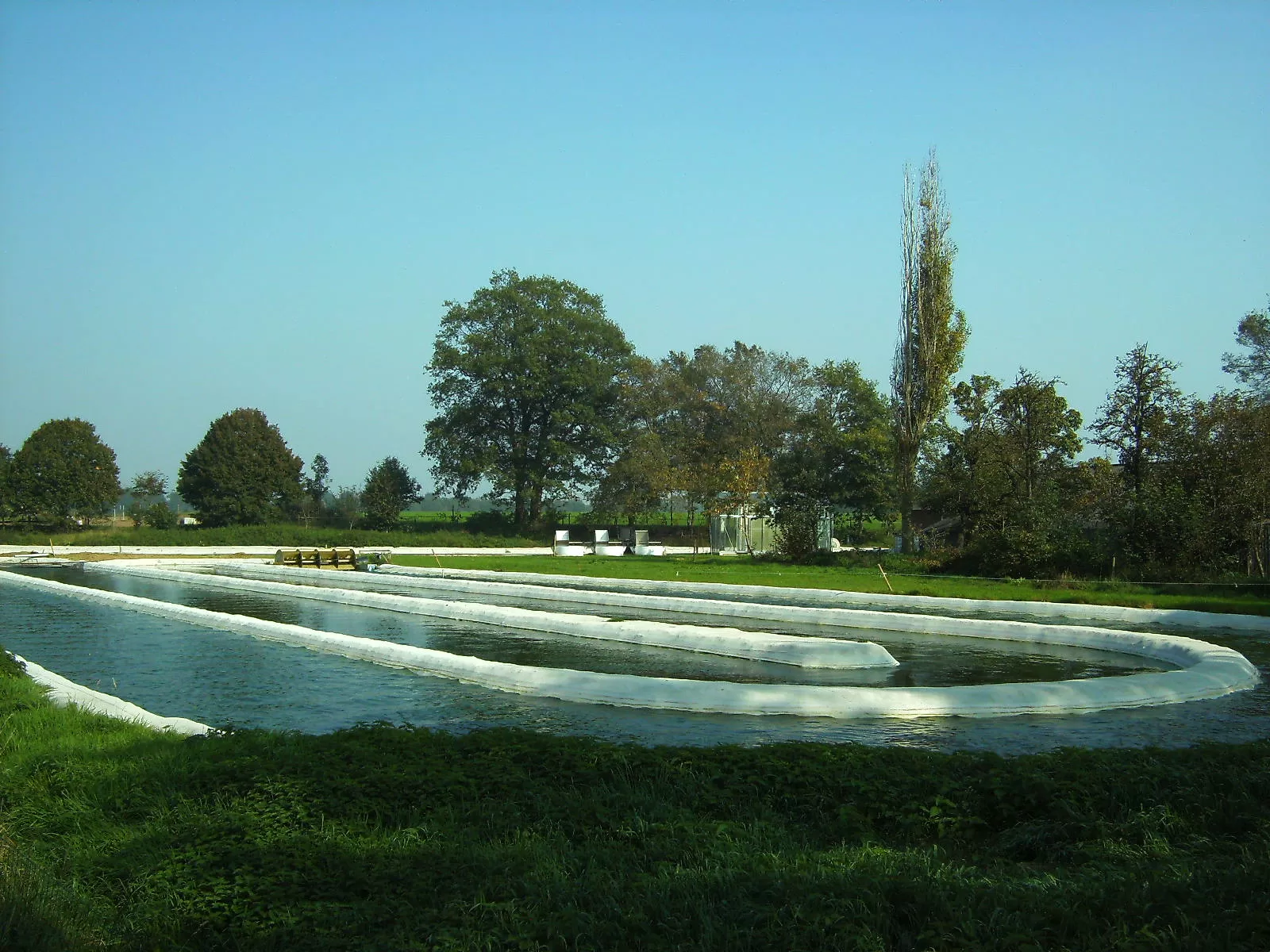
The cultivation happens primarily in raceway ponds, shallow, oval-shaped water channels where spirulina floats and multiplies under the sun.
Harvesting and Preservation
Once the culture reaches the right density, fine mesh filtration captures the biomass. The material is then washed and dried. Drying is not a throwaway step: time and temperature affect color, odor and nutrient retention.
Resource Use
Spirulina is often discussed as a resource-efficient protein source. The claim depends on the cultivation system, energy use, drying method and yield. It is a real advantage only when the production system is run well.
Nutritional Profile
Dried spirulina is concentrated. Its composition varies by strain and process, but commercial material is typically valued for protein, minerals and pigments.
Protein
Spirulina is commonly reported at 60-70% protein by dry weight. That does not mean a small serving replaces a high-protein meal, but it does make spirulina unusually protein-dense for a dried biomass.
The PDCAAS (Protein Digestibility-Corrected Amino Acid Score) of spirulina can exceed 0.9. For formulation, serving size still decides whether a meaningful protein claim is possible.
Vitamins and Minerals for Everyday Energy
Beyond protein, spirulina can contribute:
- B Vitamins: Essential for energy production and nervous system health
- Iron: Highly bioavailable iron that your body readily absorbs
- Magnesium: Supports muscle function and energy production
- Potassium: Important for heart health and cellular function
- Beta-Carotene: A precursor to vitamin A, relevant to eye health and immunity
Phycocyanin and Other Pigments
The blue-green color comes partly from phycocyanin, a pigment-protein complex that also drives interest in spirulina-derived natural blue systems. It is a valuable marker for quality, but it is sensitive to heat, light and pH.
Spirulina also contains carotenoids such as zeaxanthin. Exact levels depend on strain, cultivation and processing.
Claims Need Care
Spirulina can support a nutrition-forward product, but health claims need finished product data and local regulatory review.
Serving Size
Spirulina is dense by dry weight, but most consumer servings are small. Finished-product nutrition panels matter more than generic raw-material claims.
Sensory Fit
Spirulina has a green, marine, earthy note. It works best when that flavor makes sense: savory snacks, smoothie blends, green powders, bars with cocoa or nut systems, and products where color is part of the concept.
Documentation
A good spirulina file should show species identity, cultivation controls, heavy metals, microbiology, pesticide residues, mycotoxins and batch consistency.
What Buyers Should Look For
For product development, the useful questions are direct:
- What species and strain is being supplied?
- How is the biomass cultivated and dried?
- What is the phycocyanin or pigment marker?
- What contaminants are tested on each batch?
- Does the flavor and color fit the finished product?
The old food history is interesting. The current lot data is what determines whether spirulina belongs in a formula.
Evaluate Spirulina
Review Viridia's spirulina formats, cultivation controls and batch documentation.
Shop SpirulinaIf you are evaluating spirulina for formulation, retail, or supplement use, start with source quality, cultivation controls and transparent testing.
More from Viridia
Keep exploring
Wild-Harvested Blue-Green Algae Is Often Not Spirulina
The main wild-harvested blue-green algae product, from Upper Klamath Lake, is a different genus, harvested from a lake where a microcystin producer blooms. Cultivated Limnospira has no genetic capacity to make microcystins. Any microcystin in a spirulina lot comes from a contaminant, and 'cultivated' is not a specification on its own.
Phycocyanin's Antioxidant Mechanism: Where the Biliverdin Reductase Story Is Established, and Where It Stops
The phycocyanobilin-to-phycocyanorubin pathway is real enzymology. The leap from that pathway to an antioxidant claim on a finished product crosses four steps, and only the first is settled. A dose-arithmetic check on what the rodent data would actually require.
Erinacines, Hericenones, and Which Lion's Mane the Trials Actually Used
The two headline Lion's Mane compound families sit in different tissues. Hericenones failed a human-cell NGF assay. What a CoA should carry.